What can we help you find?
Home » Hydrologic Projects » Big Lost River Basin
Notice
Water right changes made under the provisions of a drought declaration expire at the end of the current year unless extended or terminated by the IDWR Director.
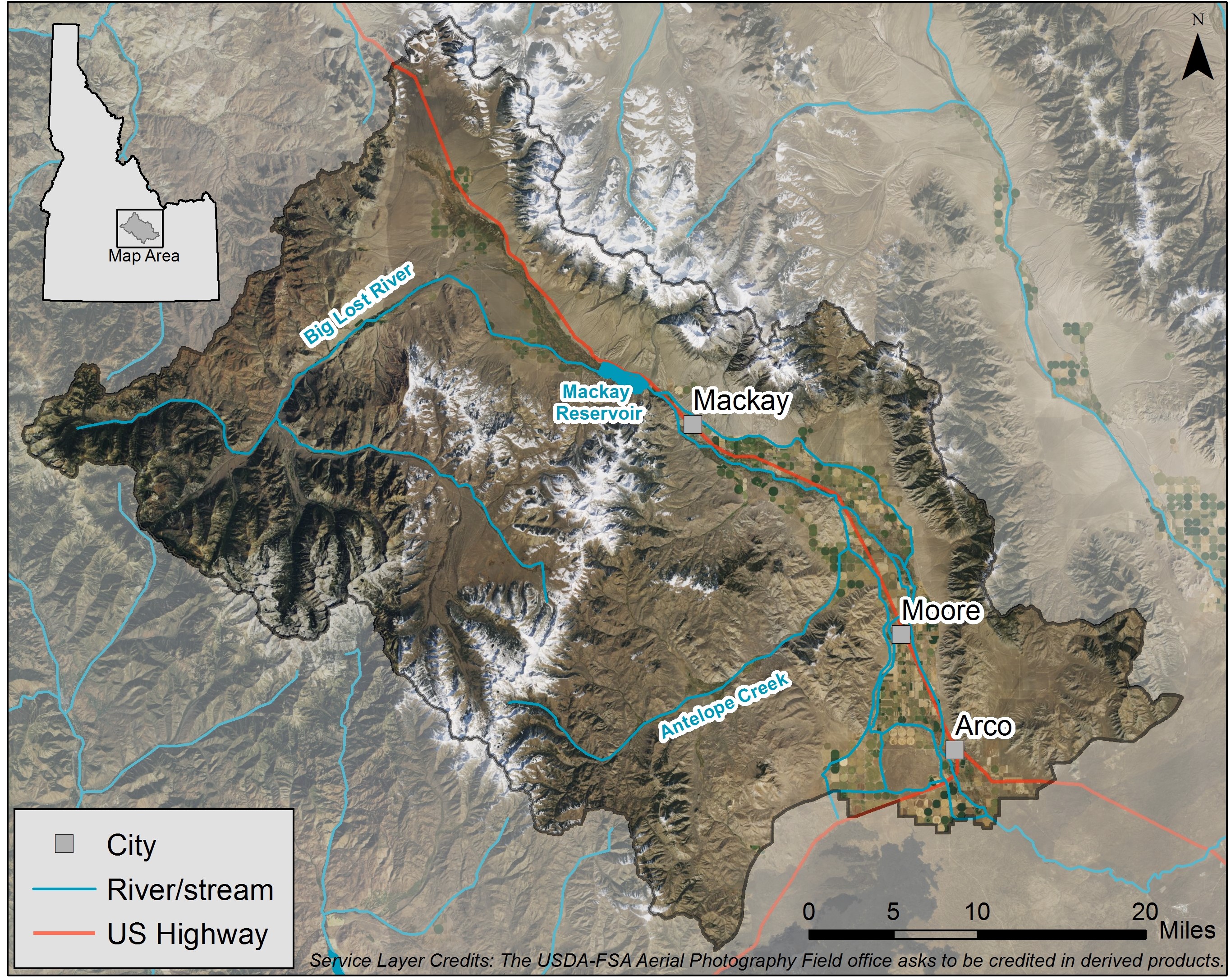
The Big Lost River Basin is located in south-central Idaho within Butte and Custer Counties. The basin serves as an important tributary to the Eastern Snake Plain Aquifer. Surface water and groundwater are used extensively in the basin for irrigated agriculture, domestic, stock, municipal, and other uses. Declining groundwater levels, reduced flows in the Big Lost River, and concerns about drought have recently motivated an investigation of water resources in the region.
From 2018-2022, IDWR conducted a hydrologic investigation to characterize the surface and groundwater hydrology of the region. This work laid the framework to begin groundwater model development in late 2022, which is currently in progress. Use the tabs above to explore various aspects of the project.

The mapper below displays current streamflow conditions in the Big Lost River Basin. Data is collected and served by the U.S. Geological Survey.
From 2018-2022, IDWR conducted a project to characterize the surface and groundwater hydrology of the Big Lost River Basin. The U.S. Department of Energy (DOE) provided funding for the project through a Supplemental Environmental Project (SEP) grant. DOE participation in this project was undertaken in connection with the settlement of an enforcement action taken by the Idaho Department of Environmental Quality for alleged violations of the requirements of the Hazardous Waste Management Act.
IDWR partnered with the Idaho Geological Survey (IGS) and the United States Geological Survey (USGS) to complete the following objectives:

The U.S. Geological Survey (USGS) is developing a groundwater flow model for the Big Lost River Basin to help answer questions arising from concerns over water resources and to provide a tool for water resource management.
The project is a collaboration between the USGS, IDWR, and IWRB with involvement from stakeholders through the Model Technical Advisory Committee (MTAC). Each entity fulfills a distinct role in the model development process. The USGS is responsible for model construction, calibration, and report preparation; IDWR is the end user, facilitates MTAC meetings, and provides modeling support; the MTAC provides a platform for stakeholder input and review on the model, scenarios, objectives, and shares data required for the model; and the IWRB provides financing via the Aquifer Planning and Management fund.
Final model rollout is scheduled for June 2025.
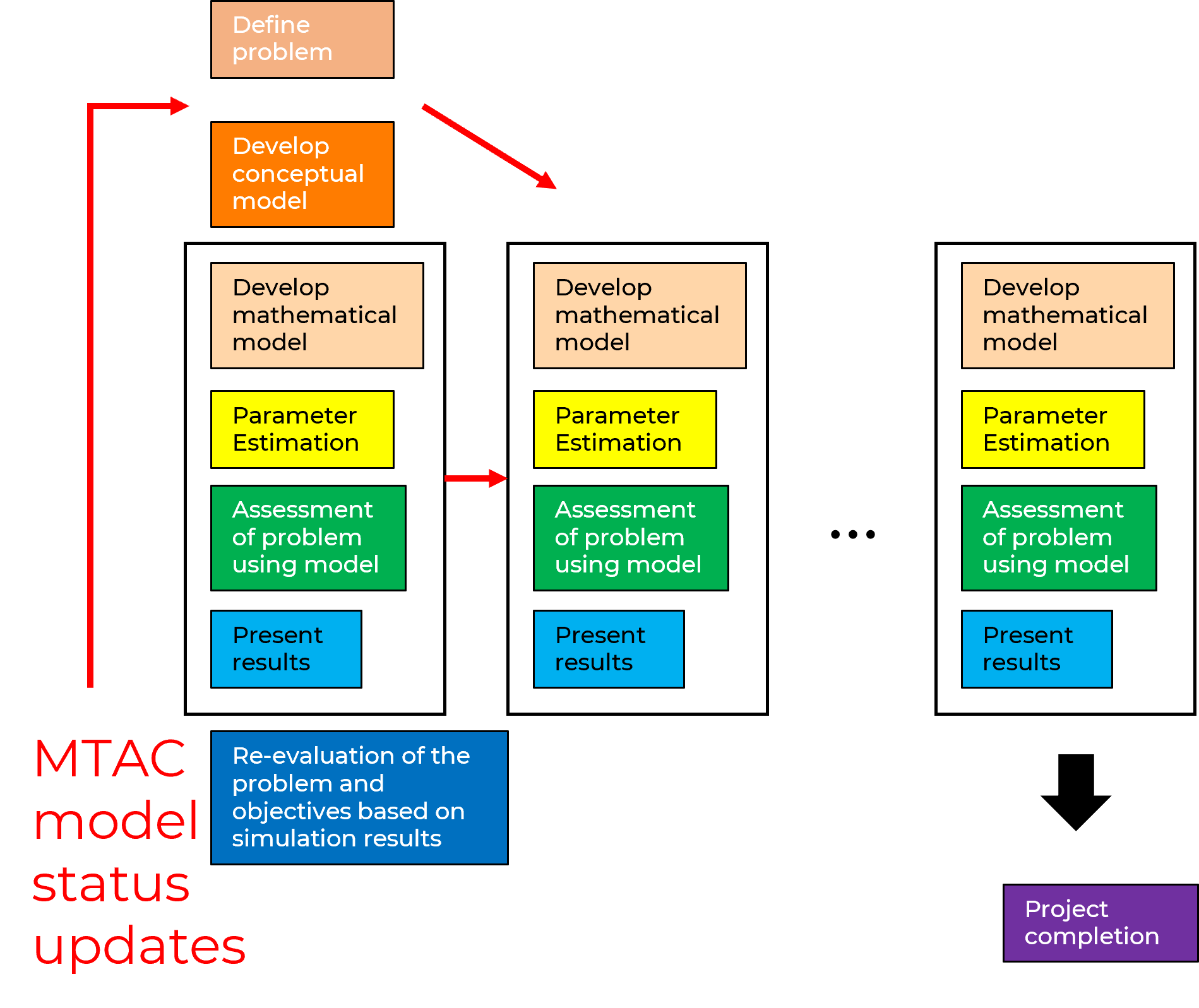
The USGS proposed an iterative and incremental approach to model development in which a minimum viable product (MVP) model is constructed from the onset of the project. As a conceptual and numerical model is discussed and refined, model structure is updated, and the model calibrated to reflect these changes. The flowchart illustrates the steps in this iterative process.
The Big Lost Modeling Technical Advisory Committee (MTAC) meets as needed.
Meeting dates, places, or times are subject to change.
Documents and files relevant to the model will be posted here throughout the model development period. Files will include