What can we help you find?
Home » Lemhi River Basin Settlement
Notice
Water right changes made under the provisions of a drought declaration expire at the end of the current year unless extended or terminated by the IDWR Director.
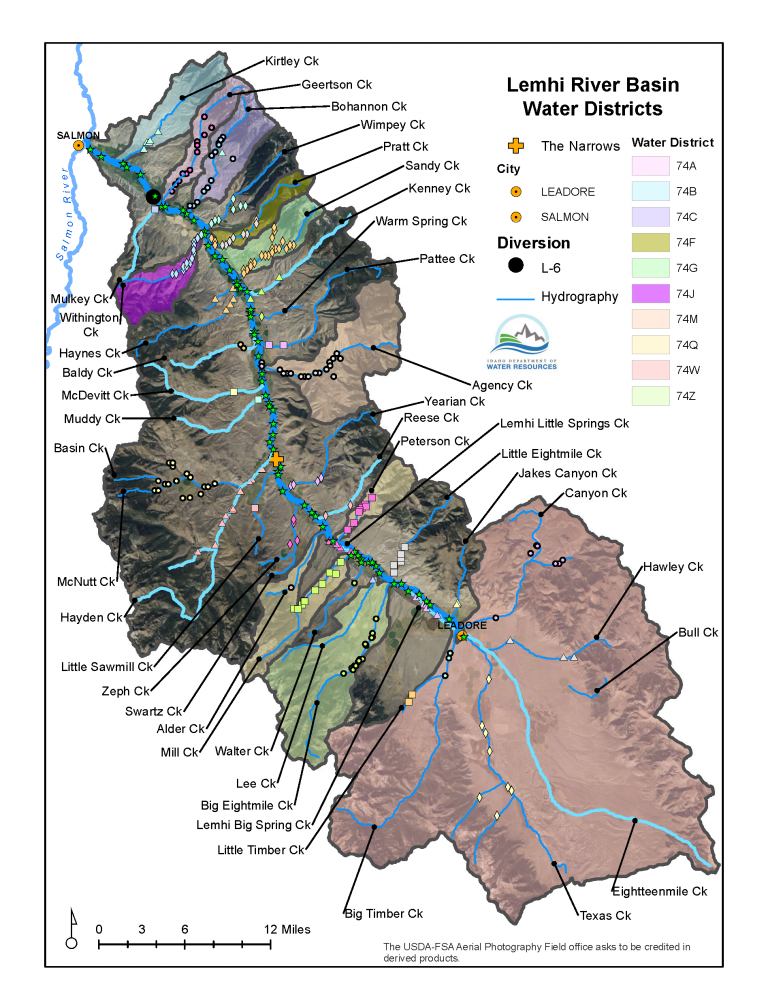
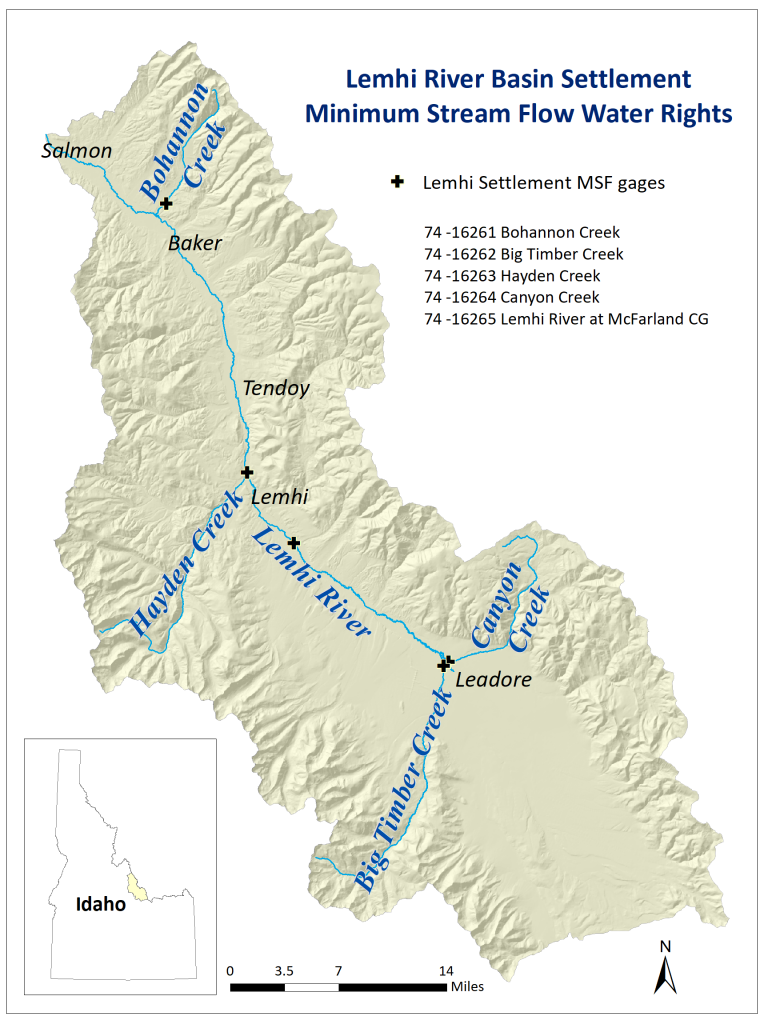
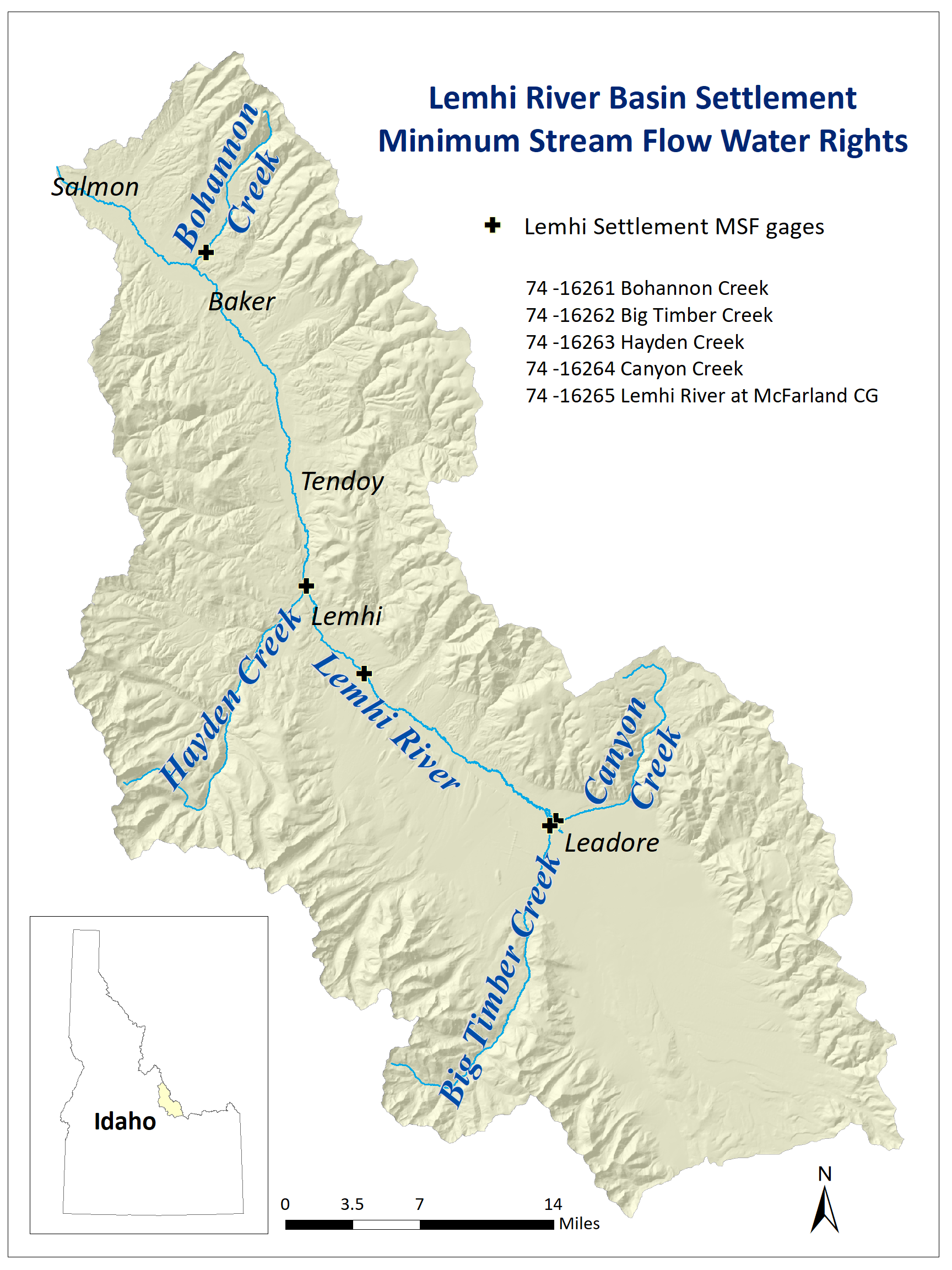
In February 2022, local water users reached an agreement to resolve long-standing water use conflict in the basin. The Lemhi River Basin Comprehensive Settlement Agreement deals with perfection of existing water right applications and new water right applications for use of high flow.
The Lemhi River Basin Settlement Agreement had three objectives: resolve protested water right applications; establish water rights for the long-time Lemhi Basin practice of diverting high-flow water during the spring runoff; and establish minimum streamflow water rights.
In achieving the three objectives, the parties to the Settlement agreed to two fundamental principles: one, the Settlement is a voluntary agreement; and two, it has no effect on existing water rights in the basin.
The Settlement outlines two overarching “Water Right Settlement Agreement Goals:”
Will the Settlement Agreement affect existing water rights?
No. The Settlement Agreement only deals with perfection of existing water right applications and new water right applications for use of high flow. Since the priority date of new water right applications will be later in time than all existing water rights, the new water rights will not alter or affect the exercise of existing water rights in the Lemhi River Basin.
What is high flow?
High flow is unappropriated natural flow over and above the amounts required to fill (1) existing water rights and (2) future rights that may be established pursuant to Idaho state law.
Is the historic practice of diverting high flow a water right?
No. The Snake River Basin Adjudication (SRBA) District Court held the historic practice of diverting high flow did not create a protectable water right. The Court, however, allowed the practice to continue through a high flow general provision. Because the historic use is not a water right, it does not have a priority date, and the use is junior to all existing and future water rights.
What is the high flow general provision?
The SRBA Final Unified Decreed includes the following provision governing the use of high flow within the Lemhi River Basin:
“(a) the waters so diverted are applied to beneficial use, and
(b) existing decreed rights and future appropriations of water are first satisfied.”
Who is allowed to divert high flow?
Persons who own irrigation water rights decreed in the SRBA and who historically diverted natural flow may continue the practice of diverting high flow provided the water is put to beneficial use and all existing water rights are being satisfied.
Will the Settlement Agreement alter regulation of water rights on tributary streams that are regulated separately from the Lemhi River?
No. Section II.6 expressly reaffirms that water rights diverted from streams listed as separate streams in the SRBA Basin 74 Separate Streams General Provision “shall be administered separately from all other water rights in Basin 74 in accordance with the prior appropriation as established by Idaho law.”
Does the Settlement Agreement subject water rights diverting from tributaries regulated as separate streams to regulation for delivery of water to the Salmon River Wild and Scenic federal reserved water rights?
No. Combined administration is an existing requirement that predates the Settlement Agreement. The SRBA Court determined the Basin 74 Separate Streams General Provision is only binding on water rights within the Lemhi River Basin. Since the Wild and Scenic water rights are located outside the Lemhi River Basin, the separate streams provision does not apply to those water rights.
What is a “Lemhi Basin Stream Flow Maintenance Water Right”?
The term “Lemhi stream flow maintenance water right” refers to a perfected water right for the historic use of high flow ancillary to decreed Lemhi River Basin irrigation water rights (“base rights”). The stream flow maintenance legislation allows irrigators in the Lemhi River Basin to perfect a water right for their historic high flow practice – something they have not been able to do in the past.
How much water can be appropriate for purposes of stream flow maintenance?
Applications for stream flow maintenance water rights are limited to the amount of actual historic beneficial use not to exceed the existing ditch capacity on August 25, 2014.
What is a bypass flow?
A bypass flow refers to a specific amount of flow that must be in a stream at a designated point before water may be diverted under a water right containing a bypass flow condition.
Click here for a full list of Frequently Asked Questions about the Settlement Agreement

The Parties to the Agreement agreed to establish a Steering Committee to oversee implementation of the Agreement. The Steering Committee shall consist of two (2) representatives of the Lemhi Irrigation District, two (2) representatives of the Upper Lemhi Basin Water Users, one (1) representative of the Idaho Department of Fish and Game, one (1) representative of the Governor’s Office of Species Conservation, and one (1) representative of the IWRB. The Basin 74 water master or an IDWR employee shall serve as an ex officio member of the Steering Committee. Water user representatives shall be parties to this Agreement. The Steering Committee shall operate on a consensus basis.
Water users that are a party to the Lemhi River Basin Settlement Agreement and met the following requirements were eligible to serve on the Lemhi Settlement Steering Committee. The Idaho Water Resource Board approved the Steering Committee Charter and membership at the March 31, 2023 meeting.
2024 Irrigation Season

Lemhi River Basin Cloudseeding Feasibility Study